
Popular Pinoy Snacks Key Takeaways
From crispy popular Pinoy snacks sold by sidewalk vendors to classic homemade merienda treats, Filipino snack culture is vibrant, flavorful, and deeply tied to memories of childhood and community.
- Popular Pinoy snacks range from deep-fried street food like turon and kwek‑kwek to sweet steamed rice cakes such as puto and kutsinta.
- Many of these snacks tell a story — they reflect regional ingredients, Spanish and Chinese influences, and the Filipino love for combining sweet, savory, and tangy flavors in one bite.
- Whether you’re craving something crunchy, sticky, or creamy, this list covers the all‑time favorites that every Filipino grew up loving.
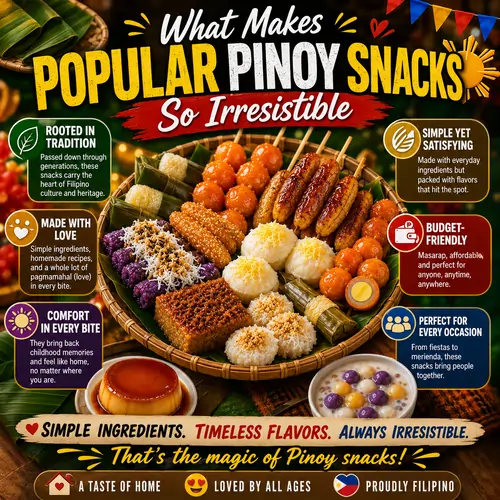
What Makes Popular Pinoy Snacks So Irresistible
Filipinos love to eat — and we love to snack even more. Merienda time is sacred, whether it’s 3 PM on a school day or a late-night trip to the carinderia. Popular Pinoy snacks are more than just food; they’re edible time machines that bring you back to afternoons spent with lolo and lola, or to the chaotic energy of a busy street corner where a vendor expertly peels boiled eggs for kwek‑kwek.
What sets these snacks apart is their bold contrast of textures and flavors. You get the crunch of deep-fried batter, the chewiness of sticky rice, the saltiness of bagoong, and the sweetness of brown sugar — often all in one serving. No wonder every Filipino has a favorite.
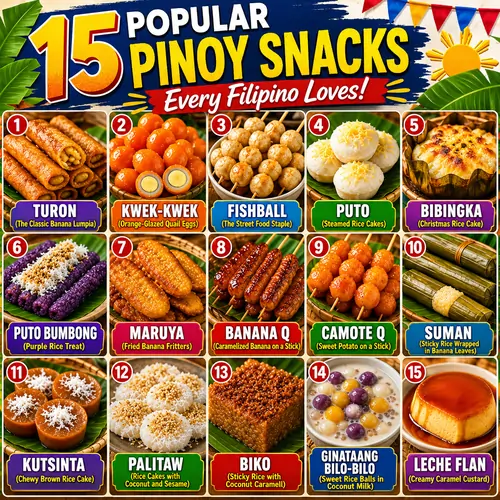
15 Popular Pinoy Snacks Every Filipino Loves
Here’s our list of the most iconic popular Pinoy snacks — some you’ll find on every street, others tucked away in provincial markets. Each one deserves a spot in your next merienda rotation.
1. Turon – The Classic Banana Lumpia
Sweet, crispy, and caramelized, turon is arguably the king of popular Pinoy snacks. Saba bananas and sometimes jackfruit strips are rolled in a lumpia wrapper, then deep‑fried until golden. A coating of brown sugar gives it that crackly glaze that shatters with every bite. It’s sold everywhere — from school canteens to mall food courts — and costs just a few pesos. Perfect with a cup of black coffee or cold softdrinks.
2. Kwek‑kwek – Orange‑Glazed Quail Eggs
You can spot a kwek‑kwek stall from a block away thanks to that bright orange batter. Hard‑boiled quail eggs are coated in an orange‑dyed flour mixture, deep‑fried, and served with a tangy vinegar dip or sweet chili sauce. The contrast between the crunchy shell and the soft egg inside makes it one of the most addictive popular Pinoy snacks around. Pro tip: dip it in sukang may sili for the full experience.
3. Fishball – The Street Food Staple
No list of popular Pinoy snacks is complete without fishball. Made from ground fish meat (or a blend that stretches the budget), these deep‑fried balls on bamboo sticks are skewered, dunked in a sweet‑savory sauce, and eaten on the go. The sauce — a mix of flour, sugar, soy sauce, and sometimes vinegar — is what makes or breaks a fishball vendor. It’s messy, cheap, and absolutely nostalgic.
4. Puto – Steamed Rice Cakes for Every Occasion
Soft, fluffy, and slightly sweet, puto is the quintessential partner to dinuguan (pork blood stew), but it shines as a snack on its own. These steamed rice cakes are made from galapong (fermented rice dough) and come in many versions — puto cheese, puto ube, puto with salted egg. Thanks to its pillowy texture and subtle sweetness, puto remains one of the most versatile popular Pinoy snacks for merienda or even breakfast.
5. Bibingka – Christmas Morning Rice Cake
Bibingka is a baked rice cake traditionally cooked in clay pots lined with banana leaves. It’s topped with salted egg, cheese, butter, and sometimes grated coconut. The slightly charred bottom and the soft, steamy middle create a wonderful contrast. While it’s a staple during the Christmas season — especially after Simbang Gabi — many bakeries now sell it year‑round. It’s hands down one of the most celebrated popular Pinoy snacks during the holidays.
6. Puto Bumbong – Purple Rice Treat
This vibrant purple sticky rice snack is steamed in bamboo tubes, giving it a unique cylindrical shape. It’s served with butter, grated coconut, and muscovado sugar. The purple color comes from a variety of heirloom rice called pirurutong. Like bibingka, puto bumbong is a Christmas fixture, but its sweet, chewy texture makes it a favorite year‑round for many. Definitely a must‑try among popular Pinoy snacks for its flavor and visual appeal.
7. Maruya – Fried Banana Fritters
Maruya is essentially saba bananas sliced lengthwise, coated in a batter of flour, egg, and sugar, then deep‑fried until golden brown. The result is a crispy, sweet fritter that’s often drizzled with honey or more sugar. Served hot, it’s simple, comforting, and incredibly satisfying — exactly what popular Pinoy snacks are all about. You’ll find maruya in almost every market and carinderia.
8. Banana Q – Caramelized Banana on a Stick
Imagine a whole saba banana skewered on a bamboo stick, coated in caramelized brown sugar, and deep‑fried. That’s Banana Q (cue). It’s a twist on turon but without the lumpia wrapper, so the sugar gets directly onto the fruit, creating a crunchy candy shell. It’s portable, sweet, and deeply nostalgic — a top contender among popular Pinoy snacks for its sheer simplicity.
9. Camote Q – Sweet Potato on a Stick
Same concept as Banana Q, but with camote (sweet potato). Chunks of sweet potato are skewered, deep‑fried, and coated in caramelized brown sugar. The natural sweetness of the potato combined with the crackly sugar coating makes it a healthier‑feeling (but still indulgent) snack. Another one of those popular Pinoy snacks that you’ll find sold side by side with Banana Q from the same vendor.
10. Suman – Wrapped in Banana Leaves
Suman is sticky rice cooked in coconut milk and wrapped in banana or palm leaves. It’s dense, slightly greasy, and often served with a sprinkling of sugar or latik (coconut caramel). There are many regional varieties — suman sa lihia from Iloilo, suman malagkit, and suman antala. Its portability and long shelf life make it a road‑trip essential among popular Pinoy snacks.
11. Kutsinta – Chewy Brown Rice Cake
Kutsinta has a uniquely chewy, jelly‑like texture that sets it apart from other rice cakes. Made from rice flour, brown sugar, and lye water, it’s steamed in small molds and topped with freshly grated coconut. The subtle sweetness and soft bite make it a perfect partner for puto or as a standalone snack. It’s undeniably one of the most underrated yet classic popular Pinoy snacks.
12. Palitaw – Soft Rice Cakes with Coconut and Sesame
Palitaw means “to float” — and true to its name, these round rice cakes float to the surface when they’re cooked. Made from galapong, they’re boiled, then coated in grated coconut, sesame seeds, and sugar. The result is a soft, airy snack with a delicate crunch from the sesame. It’s light, satisfying, and one of the oldest popular Pinoy snacks still loved today.
13. Biko – Sticky Rice with Coconut Caramel
Biko is perhaps the richest snack on this list. Malagkit (sticky rice) is cooked in a mixture of coconut milk and brown sugar until it becomes thick, sticky, and intensely sweet. It’s often served in pan de sal‑sized squares or flattened on a tray. The caramelized topping (latik) adds a deep, toasty flavor. Biko is a staple at celebrations and a comfort food that represents the heart of popular Pinoy snacks.
14. Ginataang Bilog‑Bilog (or Bilo‑bilo) – Sweet Rice Balls in Coconut Milk
This warm, soupy snack features small glutinous rice balls (bilo‑bilo) swimming in a sweet coconut milk broth, often with saba bananas, jackfruit, and tapioca pearls. It’s thick, creamy, and incredibly filling — perfect for rainy days. Some versions add a pinch of salt to balance the sweetness. It’s a hug in a bowl and a beloved item among popular Pinoy snacks for its comforting warmth.
15. Leche Flan – Creamy Caramel Custard
While technically a dessert, leche flan is eaten as a snack just as often. Made from egg yolks, condensed milk, and evaporated milk, it’s steamed until silky smooth, then inverted onto a plate with a pool of golden caramel. Its rich, creamy texture is the perfect indulgent finish to any meal. You’ll find it at almost every Filipino party, making it arguably the most celebratory of all popular Pinoy snacks.
Where to Experience These Popular Pinoy Snacks
You can find most of these popular Pinoy snacks in street food stalls, public markets (like Palengke), carinderias, and even in well‑known restaurant chains like Mang Inasal or Max’s Restaurant. For authentic regional versions, visiting provinces like Pampanga (known for its turon and bibingka) or Iloilo (famous for its suman) is a must.
How to Make Popular Pinoy Snacks at Home
If you can’t travel to the Philippines, many of these snacks are surprisingly easy to recreate in a home kitchen. A few key ingredients to stock: saba bananas, glutinous rice flour (malagkit), coconut milk, banana leaves, and muscovado sugar. Websites like Kawaling Pinoy and Panlasang Pinoy offer detailed recipes for most items on this list.
Useful Resources
For authentic recipes and more background on Filipino snack culture, check out these helpful sources:
- Kawaling Pinoy — A popular recipe blog covering everything from kwek‑kwek to leche flan, with step‑by‑step instructions.
- Panlasang Pinoy — One of the most‑visited Filipino food sites, offering classic and modern takes on traditional merienda.
Frequently Asked Questions About Popular Pinoy Snacks
What is the most popular Pinoy snack?
Turon, the deep‑fried banana lumpia, is widely considered the most popular due to its availability and sweet‑crunchy appeal.
Are popular Pinoy snacks healthy?
Many are deep‑fried or sugar‑heavy, but some like palitaw and kutsinta are steamed and lower in oil. Balance is key.
What are the best vegan Pinoy snacks?
Puto, suman, palitaw, and ginataang bilo‑bilo (without milk) are usually vegan. Always check for egg or dairy in the recipe.
Where can I buy authentic Pinoy snacks outside the Philippines?
Asian grocery stores, Filipino specialty shops (like Seafood City, Island Pacific), and online stores such as Goldilocks or Red Ribbon ship frozen and ready‑to‑eat options.
What is the difference between turon and banana cue?
Turon is wrapped in a lumpia wrapper and fried; banana cue is skewered, caramelized with sugar, and fried without a wrapper.
What drink goes best with these snacks?
Hot coffee (kapeng Barako), cold softdrinks, or sago’t gulaman are classic pairings.
Are Pinoy snacks gluten‑free?
Many are made from rice flour (galapong) and are naturally gluten‑free, but those using wheat flour (like turon wrappers) contain gluten.
What is the most popular snack for kids?
Fishballs and kwek‑kwek are huge hits among children because of their fun shape and dip‑and‑eat style.
How do you store leftovers?
Most are best eaten fresh. Rice cakes like puto and kutsinta last 2‑3 days in the fridge; reheat by steaming.
What is the most filling snack?
Biko and ginataang bilo‑bilo are very dense and satisfying, often serving as a mini meal.
Is leche flan a snack or dessert?
It’s served both ways — as a dessert after meals or as a sweet afternoon merienda, especially when paired with bread.
What is the most affordable snack?
Street‑side fishballs and kwek‑kwek cost as low as ₱5–₱10 per stick, making them the cheapest options.
Can I make these snacks vegan?
Yes, many rice‑based snacks like puto (without cheese), suman, and palitaw are naturally vegan. Use plant‑based milk for ginataan.
What is the origin of bibingka?
Bibingka predates Spanish colonization; it was traditionally cooked in clay pots over charcoal. It’s closely tied to Christmas traditions.
Are there savory popular Pinoy snacks ?
Yes, dinuguan with puto, siomai, and empanadas are savory snacks that are also very popular.
What is the best time to eat these snacks?
Merienda (around 10 AM and 3‑4 PM) is the traditional snack time, but any time is fair game.
Do Filipinos eat these snacks for breakfast too?
Absolutely. Puto, suman, and bibingka are common breakfast items, especially in provinces.
What is the most difficult snack to prepare?
Puto bumbong requires a special bamboo steamer and heirloom purple rice, making it one of the more labor‑intensive snacks.
Are these snacks available frozen?
Yes, brands like Goldilocks and Mama Sita’s sell frozen turon, biko, and puto in supermarkets and online.
What is the most unique snack on the list?
Palitaw is unique because it floats when cooked, and its coating of sesame and coconut gives it a texture unlike any other.
