
Classic Filipino Refreshments Key Takeaways
Filipino refreshments are more than just thirst-quenchers—they are edible memories of childhood afternoons, fiestas, and balikbayan homecomings.
- These classic Filipino refreshments use simple, often indigenous ingredients like coconut, sago, and kamote.
- Many drinks are both desserts and beverages, reflecting the Filipino love for sweet and savory contrasts.
- Each refreshment has a rich history—some trace back to pre-colonial times, others to Spanish and American influences.

What Makes Classic Filipino Refreshments So Irresistible
Growing up in the Philippines means knowing the sound of the sorbetero’s bell and the sight of a sweating glass of ice-cold sago’t gulaman on a jeepney ride home. These drinks are not just about sugar and ice—they represent resourcefulness, community, and the art of making something extraordinary from everyday ingredients. Coconuts, sticky rice, root crops, and tropical fruits form the backbone of these beloved beverages. Whether served at a backyard party or from a street cart, each sip carries the warmth of Filipino hospitality.
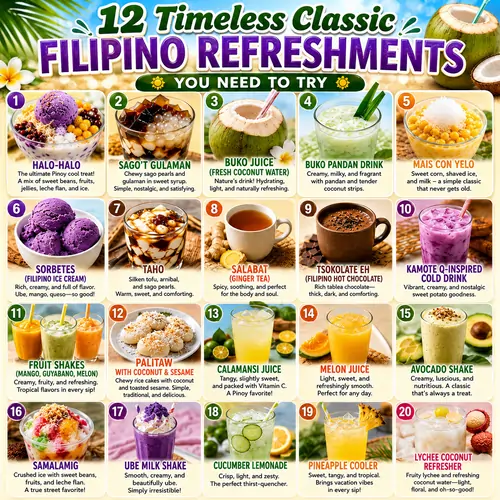
12 Timeless Classic Filipino Refreshments You Need to Try
Here is a rundown of the 12 classic Filipino refreshments that have stood the test of time. Each entry includes its origin, flavor profile, and why it remains a favorite today.
1. Halo-Halo
Halo-halo literally means “mix-mix,” and that is exactly what you do. This shaved ice dessert is layered with sweetened beans, leche flan, ube halaya, pinipig, macapuno, and evaporated milk, then topped with ice cream. It is the ultimate summer treat and a staple at carinderias and restaurants nationwide. Its popularity spans all ages and social classes.
2. Sago’t Gulaman
A simple combination of sago (tapioca pearls) and gulaman (agar jelly) in sweetened brown sugar water with ice. It is the quintessential street drink, sold in plastic bags or tall glasses. The chewy texture of the pearls against the smooth jelly makes every sip satisfying. It is also one of the most affordable refreshments.
3. Buko Juice (Fresh Coconut Water)
Fresh young coconut water served straight from the shell or with shredded coconut meat. Known for its natural electrolytes, buko juice is a go-to after a long day under the sun. It is often sold by vendors near beaches and bus terminals. Some versions add a splash of calamansi or sugar.
4. Buko Pandan Drink
Made by blending pandan-flavored gelatin with shredded young coconut and creamy milk, this drink is a fiesta staple. Its bright green color and sweet, fragrant pandan aroma make it instantly recognizable. Many Filipinos remember seeing a huge punch bowl of buko pandan at family reunions. It is served cold and sometimes includes small tapioca pearls.
5. Mais Con Yelo
Shaved ice topped with sweet creamed corn and evaporated milk. Simple, sweet, and refreshing—mais con yelo is a childhood favorite. Vendors often add a drizzle of condensed milk for extra richness. It is a quick, no-cook dessert that still feels indulgent.
6. Sorbetes (Filipino Ice Cream)
Often called “dirty ice cream,” sorbetes is a traditional coconut milk-based ice cream sold from colorful carts. Popular flavors include ube, mango, cheese, and chocolate. It is less creamy and more icy than Western ice cream, making it perfect for hot days. The vendor serves it in a bread bun or a cone.
7. Taho
Soft tofu (silken tofu) served with arnibal (brown sugar syrup) and sago pearls. While technically a breakfast snack, taho is also sold as a mid-afternoon refreshment. The vendor balances two large aluminum buckets on a pole and calls out “Taho!” in a distinctive sing-song voice. It is warm, sweet, and surprisingly filling.
8. Salabat (Ginger Tea)
Fresh ginger root steeped in hot water with sugar. While served warm, salabat has a natural heat that surprisingly cools you down after drinking it. It is also known for soothing sore throats and aiding digestion. Many households make it from scratch, especially during rainy season.
9. Tsokolate Eh (Filipino Hot Chocolate)
Made from tablea de cacao (pure cocoa tablets), tsokolate eh is thick, slightly bitter, and deeply comforting. It is traditionally served with breakfast or merienda. The name “tsokolate eh” refers to the way the drink is frothed by pouring it between two cups. It pairs perfectly with puto or suman.
10. Kamote Q / Turon Drink Inspiration
While technically a snack, kamote Q (candied sweet potato skewers) and turon (banana spring rolls) often inspire beverage versions. Some vendors serve a sweet potato-based cold soup with ginger and coconut milk. It is a refreshing twist on the classic fried treats and showcases the Filipino knack for using root crops.
11. Fruit Shakes (Mango, Guyabano, Melon)
Filipino fruit shakes are made with fresh tropical fruits, milk, sugar, and crushed ice. Mango shake is the most popular, but guyabano (soursop) and melon shakes are also beloved. Street stalls and restaurants alike serve these thick, creamy drinks. They are a healthier alternative to sugary sodas.
12. Palitaw with Coconut and Sesame
Though typically eaten as a dessert, palitaw (rice cakes) is sometimes served in a bowl with cold coconut milk and sugar, almost like a chilled soup. The soft, chewy rice cakes contrast beautifully with the milky liquid. It is a lesser-known but authentic way to enjoy this traditional kakanin.
Why These Classic Filipino Refreshments Endure
The staying power of these classic Filipino refreshments lies in their simplicity and deep cultural roots. Many use ingredients that grow abundantly in the country—coconut, sago, root crops, and tropical fruits. They are also affordable, accessible from street vendors, and evoke strong nostalgia. More importantly, they bring people together. Sharing a tall glass of sago’t gulaman or spooning into a halo-halo with family is a shared experience that no modern beverage can replace.
How to Choose the Right Classic Filipino Refreshments for Any Occasion
Not every refreshment fits every moment. Here is a quick guide to help you pick the perfect drink for your needs.
| Occasion | Best Refreshment | Why It Works |
|---|---|---|
| Ultra-hot summer day | Halo-Halo | Layered ice and sweets cool instantly |
| Street food stroll | Sago’t Gulaman | Portable, cheap, and refreshing |
| Morning breakfast | Taho | Warm, filling, and protein-rich |
| Fiesta party | Buko Pandan Drink | Can be made in large batches |
| Post-meal dessert | Mais Con Yelo | Light and sweet |
| Rainy afternoon | Salabat | Warms the body from within |
Useful Resources
For more on the history and preparation of these drinks, check out these reliable sources:
From the first spoonful of halo-halo to the last sip of sago’t gulaman, these classic Filipino refreshments are more than drinks—they are a celebration of culture. Next time you feel the heat, skip the soda and reach for a taste of tradition. Which one will you try first?
Frequently Asked Questions About Classic Filipino Refreshments
What is the most popular classic Filipino refreshment?
Halo-halo is arguably the most iconic, as it combines several Filipino ingredients in one dessert-drink.
Are these refreshments available year-round?
Most are available year-round, but some like fresh buko juice and fruit shakes are best during summer when fruits are in season.
Can I make sago’t gulaman at home?
Yes, it is very easy. Cook sago pearls and gulaman jelly separately, then combine with brown sugar water and ice.
What is the difference between sorbetes and regular ice cream?
Sorbetes uses coconut milk instead of dairy cream, giving it a lighter, icier texture and a distinct taste.
Is taho healthy?
Taho is rich in protein from tofu, but the arnibal syrup adds sugar. It can be part of a balanced diet when consumed in moderation.
What does “sago’t gulaman” mean?
It is a contraction of “sago at gulaman,” meaning tapioca pearls and agar jelly.
Can I find these drinks outside the Philippines?
Yes, many Filipino restaurants and grocery stores abroad carry halo-halo ingredients, sago, and gulaman.
What is tsokolate eh made of?
It is made from tablea de cacao, which are pure roasted and ground cacao pellets, mixed with water or milk and sugar.
Why is it called “dirty ice cream”?
Historic concerns about street vendor hygiene gave it that nickname, but modern sorbetes is clean and widely loved.
How do you make buko pandan drink?
Boil pandan leaves with gelatin to set the jelly, then mix with shredded young coconut, milk, and sugar before chilling.
Is salabat only for sick people?
No, it is consumed by many as a daily tea, especially during colder months or after a heavy meal to aid digestion.
What fruits are used in Filipino shakes?
Mango, guyabano (soursop), melon, banana, avocado, and durian are common choices.
Can halo-halo be vegan?
Yes, skip the leche flan and ice cream, and use coconut milk instead of evaporated milk for a vegan version.
What is the best time to eat taho?
Traditionally, taho is enjoyed in the morning or early afternoon when vendors pass by neighborhoods.
Are these refreshments high in sugar?
Many are sweetened, but you can adjust sugar levels at home or request less syrup from vendors.
What is the origin of halo-halo?
Halo-halo evolved from Japanese shaved ice desserts like kakigori, introduced during the early 20th century and adapted by Filipinos.
How do you pronounce sago’t gulaman?
It sounds like “sah-got goo-lah-man.” The ‘g’ is hard.
Can you drink salabat cold?
It is traditionally served hot, but iced ginger tea is also becoming popular in modern cafes.
What does “mais con yelo” mean?
It is Spanish for “corn with ice.” Simple and descriptive.
Where can I buy tablea de cacao?
Filipino grocery stores, online shops, and local markets in the Philippines sell tabletas for making tsokolate.
